
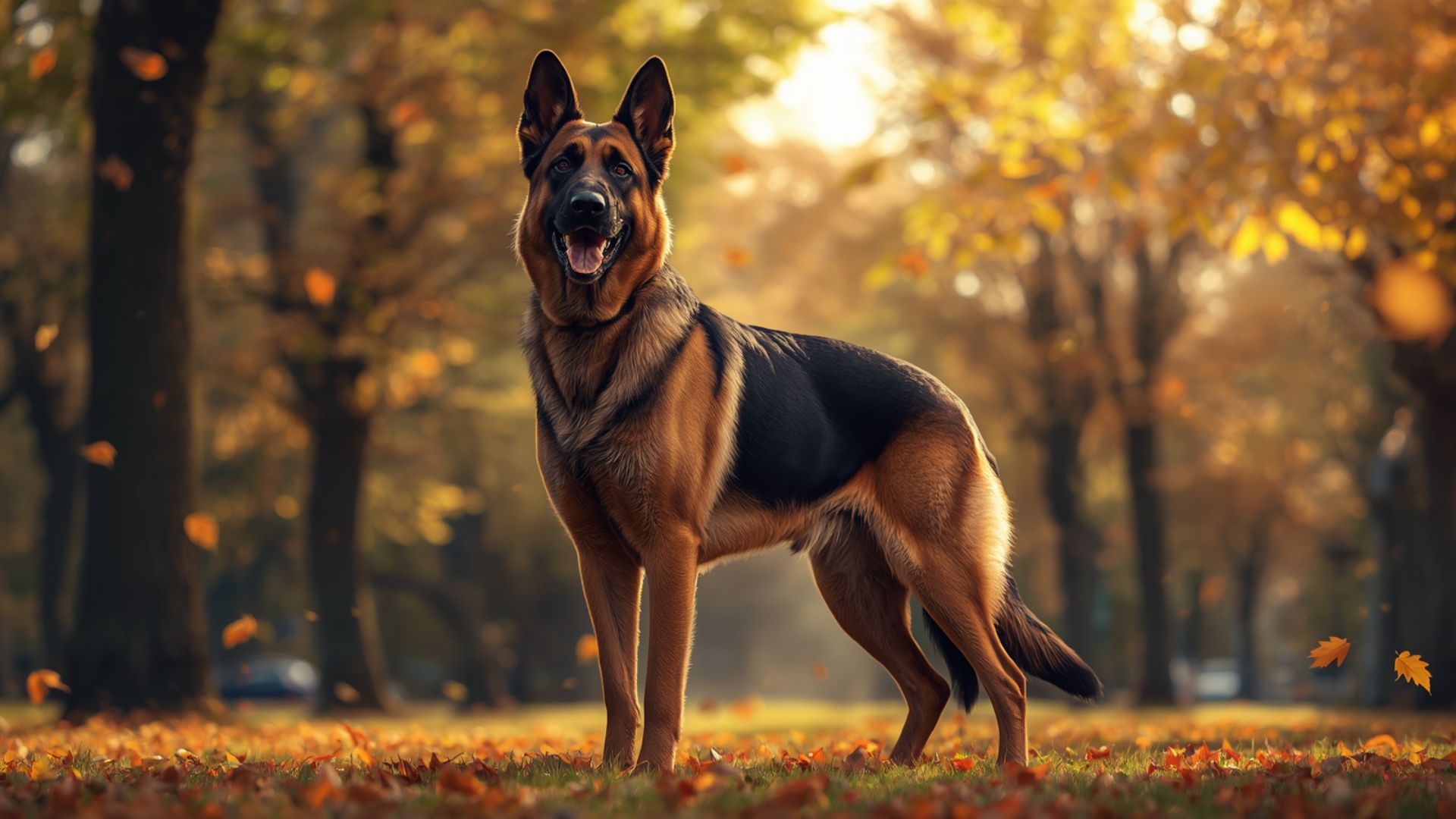
German shepherds are some of the most intelligent, loyal and versatile breeds of dogs in the world. Regardless of whether they are family companions, working dogs or service animals, they experience extraordinary physical and psychological transformations as they mature. Knowledge of every stage of development will assist owners to give the appropriate nutrition, training, exercise, and healthcare at the right time.
Although all dogs develop at their own rate, German shepherds tend to have a predictable growth rate between birth and adulthood. Being aware of what to anticipate can assist you in determining normal growth and when you might need veterinary care.
German Shepherd Growth at a Glance
| Age | Development Stage | What to Expect |
| Birth to 2 Weeks | Neonatal | Eyes and ears closed, fully dependent on mother |
| 2–4 Weeks | Transitional | Eyes open, hearing develops, first steps |
| 1–3 Months | Puppy | Rapid growth, socialization begins |
| 3–6 Months | Juvenile | Teething, learning commands, active play |
| 6–12 Months | Adolescent | Growth slows, sexual maturity begins |
| 12–24 Months | Young Adult | Muscle development and mental maturity |
| 2–3 Years | Adult | Fully developed physically and emotionally |
Birth to 2 Weeks: Neonatal Stage
Puppies of German Shepherd are totally reliant on their mother.
At this time, puppies:
- Sleeps almost all day.
- Nurse every few hours
- Unable to control body temperature.
- Have closed eyes and ears
- Trust to smell and feel.
The most significant sign of healthy development is healthy weight gain. Under normal conditions, puppies are expected to gain weight on a daily basis.
At this point, the owners are not supposed to handle the animals unnecessarily and concentrate on giving them a warm, clean and stress free environment.
2-4 weeks: The Transitional Period
At about two weeks old, there are exciting changes.
Puppies start to:
- Open their eyes
- Hear sounds
- Stand and walk
- Wag their tails
- Interact with littermates
Their characters also start to appear. Light human contact at this age contributes to making the puppies become confident and well socialized in future.
1-3 Months: Infancy Puppyhood
It is among the most rapid growth phases of a German Shepherd.
Puppies are curious and active during these weeks. They start to investigate the world around them and acquire the necessary social skills.
Key milestones include:
- Eating solid food
- Learning their name
- Beginning house training
- Developing bite inhibition
- Receiving first vaccinations
- New friends and pets.
It is also the best time to socialize. Good experiences at this stage will contribute to lessening fear and anxiety as your dog grows up.
3-6 months: Accelerated Development and Learning
At this stage, German Shepherd puppies develop very rapidly.
They become:
- More independent
- Highly playful
- Quick learners
- Physically stronger
The process of teething lasts between three and six months, and during this time, puppies chew furniture, shoes and toys.
Give long lasting chew toys to guard your possessions as well as the developing teeth of your puppy.
Simple obedience training ought to entail:
- Sit
- Stay
- Come
- Leave it
- Being on a leash.
Positive reinforcement and consistency develop a lifetime of good behavior.
6-12 Months: The Adolescent Stage
According to many owners, this stage is the teenage years.
Even though your German Shepherd might appear almost mature, they are still growing mentally and emotionally.
Common characteristics include:
- Increased energy
- Testing boundaries
- Strong curiosity
- Higher confidence
- Continued learning
German shepherd males tend to keep increasing in height at this stage and females might be able to attain most of their adult height at an earlier stage.
Exercise is more and more significant, but at the same time, do not overdo high-impact exercises until the growth plates have matured.
12-24 months: Development of the Young Adult
In one year, most German shepherds have attained their adult size.
However, they continue developing:
- Muscle mass
- Chest width
- Strength
- Coordination
- Emotional maturity
Working-line German Shepherds can be very active at this age and can enjoy some advanced training exercises such as:
- Agility
- Tracking
- Obedience competitions
- Scent work
- Protection sports
This intelligent breed must be mentally stimulated as much as it is exercised.
2-3 Years: Maturity of Full Adult
German shepherds usually become fully mature physically and mentally in the age of two to three years.
At this age, they tend to possess:
- Fully developed muscles
- Strong bones
- Stable temperament
- Improved focus
- Better impulse control
When well taken care of, most German Shepherds are still active in their old age.
German Shepherd Growth Chart
The chart below gives average weights ranges. Each dog can be different based on genetics, diet and activity level.
| Age | Male weight | Female weight |
| 1 Month | 5–9 lbs | 4–8 lbs |
| 2 Months | 16–20 lbs | 11–17 lbs |
| 3 Months | 22–30 lbs | 17–26 lbs |
| 4 Months | 35–40 lbs | 31–35 lbs |
| 5 Months | 40–49 lbs | 35–44 lbs |
| 6 Months | 49–57 lbs | 44–49 lbs |
| 9 Months | 64–71 lbs | 55–60 lbs |
| 12 Months | 71–75 lbs | 60–65 lbs |
| 18 Months | 75–85 lbs | 60–70 lbs |
| Adult | 65–90 lbs | 50–70 lbs |
These are averages and are not to substitute veterinary assessments.
Factors That Influence German Shepherd Growth
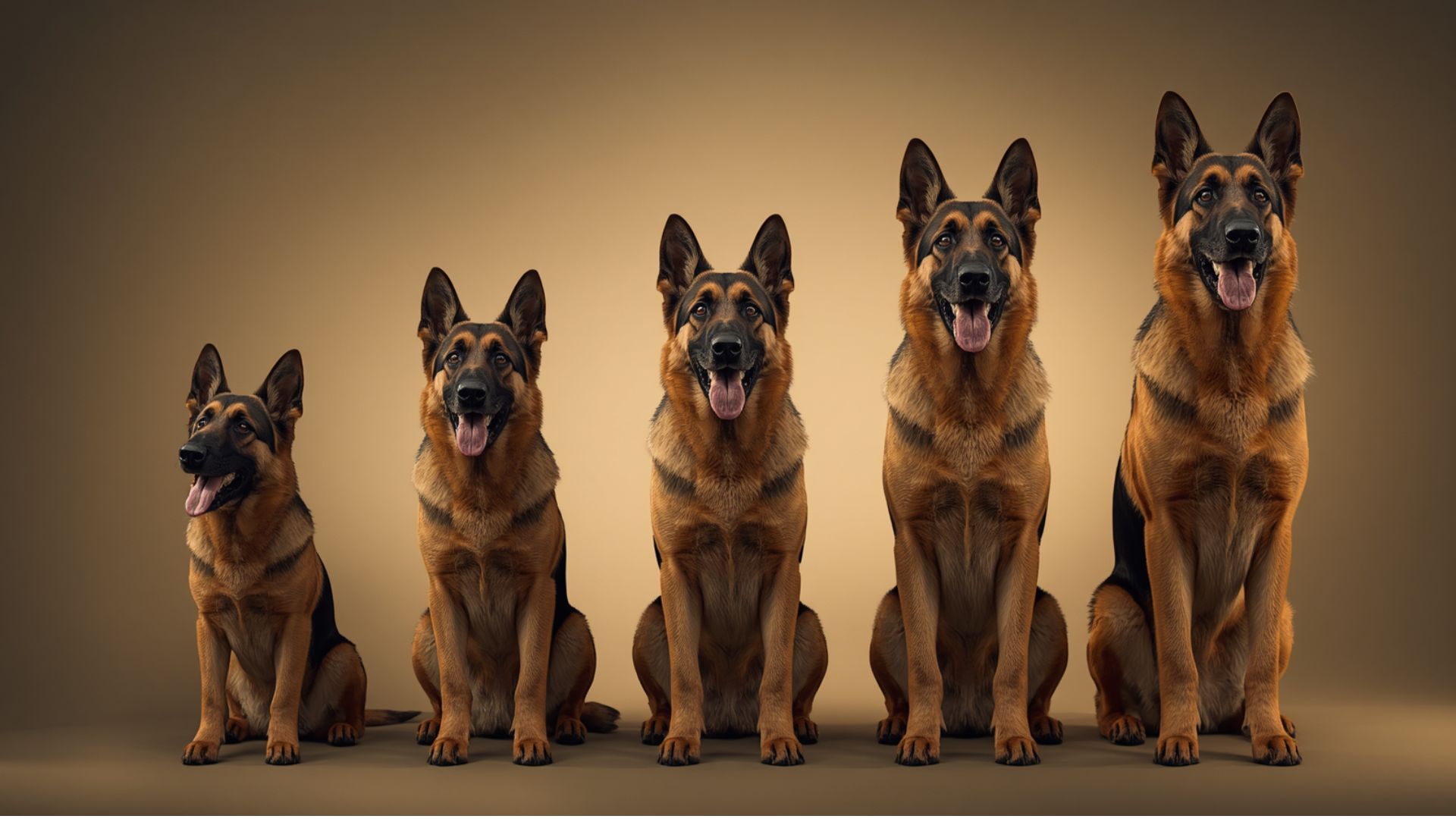
The rate at which your puppy develops and its success is dependent on several factors.
Genetics
The size, body structure, and growth rate of an adult dog is largely dependent on the parents of the puppy.
German shepherds that are used as working dogs tend to be leaner in their body structure whereas show line dogs can be wider-bodied.
Nutrition
Puppy food that is of high quality contains the necessary nutrients to develop healthy bones and muscles.
Find diets that include:
- High-quality protein
- Healthy fats
- Calcium
- Phosphorus
- DHA to develop brain.
Do not overfeed, because gaining weight too fast puts you at risk of joint problems.
Exercise
- German shepherds need to be active but not overly jumping or running long distances as their bones are still growing.
- Exercising according to age helps in keeping joints and muscles healthy.
Veterinary Care
Regular examinations enable the veterinarians to check:
- Weight
- Growth rate
- Vaccinations
- Parasite prevention
- Dental development
Many of the long-term health problems can be prevented with early intervention.
Frequently Asked Questions
When is a German Shepherd fully grown?
The average German shepherd is 1218 months old before they are able to attain their adult height but they will keep on adding on muscles and maturing mentally up to the age of 2-3 years.
What is the weight of a 6-month-old German shepherd?
The average weight of a healthy male is 49-57 pounds and that of a female is 44-49 pounds, although there may be variations in the growth of an individual.
At what age do I change to adult dog food?
The majority of the veterinarians will advise to switch to adult food at 12-18 months, depending on the size and development of your dog.
Do German shepherds grow after two years?
Other dogs will keep on gaining muscle and body mass until they are about three years old, despite the fact that they are already at their maximum height.
The most appropriate indicators of healthy development are steady weight gain, healthy appetite, normal energy levels, and regular checkups with the veterinary.

Leave a Comment