

Have you ever wondered what the world looks like through your dog’s eyes? Dog vision is fascinating, and it’s very different from human vision. While many people believe dogs only see in black and white, that’s actually a myth. The truth is much more interesting.
In this article, you’ll discover amazing facts about dog vision, how dogs see colors, how well they see at night, and what makes their eyesight so unique.
How Dog Vision Is Different From Human Vision
Dogs and humans see the same world, but not in the same way. The structure of a dog’s eyes is designed for survival, movement detection, and low-light vision rather than fine detail and vibrant color.
Fewer Color Receptors
The retina has special cells known as cones which perceive color. There are three varieties of cones in humans, and these help us to perceive a great variety of colors. The number of cones in dogs is two only.
This implies that dogs possess dichromatic color vision like an individual who is color blind (red-green) is.
They can see shades of:
- Blue
- Yellow
- Gray
- There are some variations of these colors.
However, reds and greens appear more like brownish or grayish tones to them.
Therefore, throwing a bright red ball into green grass might not be very noticeable to your dog like a toy of blue or yellow color would.
What Colors Can Dogs Actually See?
What colors can dogs see? Is one of the most popular questions that people are asking about dog eyesight.
Dogs see the world mainly in shades of blue and yellow. Colors like red, orange, and green don’t appear as vivid as they do to humans.
Instead:
- Red can be dark brown or gray.
- Green can be yellowish or drab.
- Purple may look like blue.
This doesn’t mean your dog’s world is boring. It just means their visual system is tuned differently. For toy selection, blue and yellow items are often easier for dogs to spot, especially outdoors.
Dogs Have Superior Night Vision
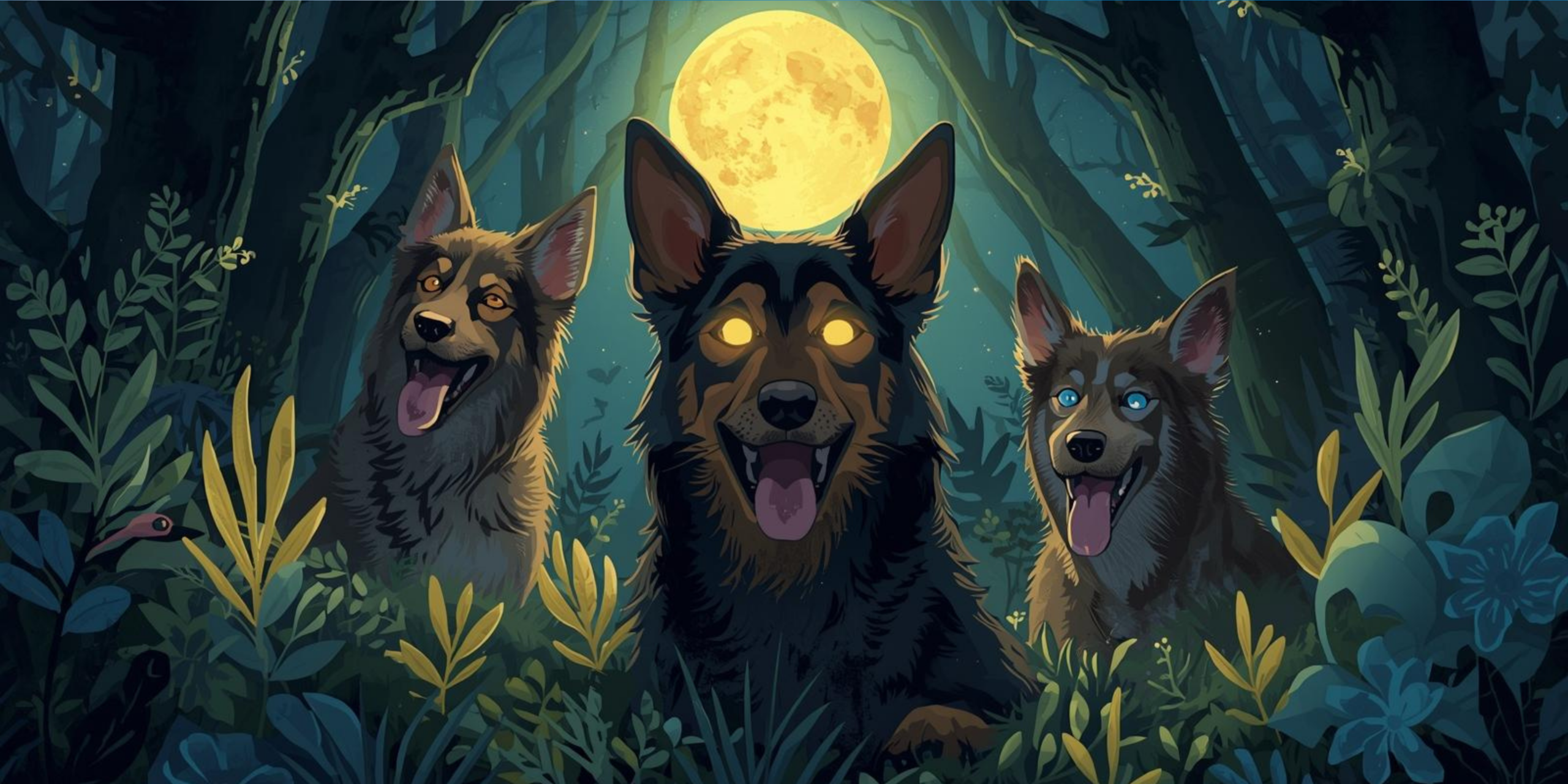
When you have ever seen your dog walking confidently in the dark there’s a good reason for it.
More Rod Cells for Low Light
Rod cells are also found in the retina and they aid in vision in the dark. Human beings have far fewer rod cells compared to dogs. This provides them with the outstanding vision at night and enhanced tracking in low-light scenarios.
The Tapetum Lucidum Effect
There is a reflective layer behind the retina of dogs known as tapetum lucidum. This layer causes the light to bounce back through the retina to enable the eye to take in more light.
It is also what makes the eyes of the dog shine when the light falls on them in darkness.
Dogs are able to see considerably in dark places due to this arrangement. Such skill assisted their forebears to hunt at the dawn and at the dusk.
Dogs Are Masters of Motion Detection
One of the most amazing facts about dog vision is their ability to detect movement.
Dogs are very sensitive to movement even in the far away. They are able to see small movements that a human being may totally fail to notice.
This skill comes from:
- A higher number of rod cells
- A wider field of vision
- Evolution as hunters and protectors.
Your dog may react to a person or animal moving far away before you even notice it. This explains why dogs often bark at things that seem invisible to us.
Dogs Have a Wider Field of View
The field of view is another significant difference between dog and human vision.
The field of vision of human beings is approximately 180 degrees. Dogs with field of vision of between 240 and 270 degrees depending on the breed and head shape.
Why Head Shape Matters
Dogs with longer noses, such as Greyhounds or other sighthounds, often have a wider field of view. Dogs with flatter faces may have a slightly narrower range.
A wider field of vision helps dogs:
- Detect predators or threats
- Spot movement quickly
- Move around in the world more effectively.
However, this wider view comes with a trade-off: less depth perception compared to humans.
Dogs Don’t See Fine Details as Clearly
While dogs excel at motion detection and night vision, they don’t see sharp details as clearly as humans.
A common comparison used by vision experts is this:
- An individual with normal vision is able to see at 75 feet.
- It will require a dog to be approximately 20 feet distant to see the same detail clearly.
This implies that dogs are a little farsighted as human beings. The distance objects might be blurred to them.
That’s why dogs rely heavily on their other senses, especially smell and hearing.
Dogs Rely More on Smell Than Sight
Dogs have good eyesight, although not their best sense.
The part of a dog’s brain dedicated to analyzing smells is much larger, proportionally, than in humans. According to experts from organizations like the American Kennel Club, dogs use scent as their primary way of understanding the world.
While humans rely heavily on sight, dogs gather more information through:
- Smell
- Sound
- Body language
So even if something looks blurry or color-muted to your dog, they can easily identify it by scent.
Puppies and Senior Dogs See Differently
Dog vision changes throughout life, just like human vision.
Puppy Vision Development
At birth, the eyes of puppies are closed. At an age of about two weeks, they start opening them. At that, even their vision is blurred and is evolving during the following several weeks.
In early development, most of the sense of smell and touch is relied upon by puppies.
Aging and Vision Loss
Old age may cause dogs to develop the following eye conditions:
- Cataracts
- Glaucoma
- Nuclear sclerosis
Such conditions may have an impact on clarity and brightness. Veterinary checkups are also done on a regular basis to identify and treat vision problems.
How Dog Vision Influences Behavior
Understanding how dogs see helps explain many common behaviors.
For example:
- A dog will overlook red toy in green grass since it is disguised.
- Even when it is a long distance they can respond in a very strong reaction to sudden movement.
- They might feel much more secure walking in the dusk than you.
Their visual strengths—motion detection and low-light vision—are rooted in their ancestry as hunters and pack animals.
Recognizing these differences can help you choose better toys, create safer environments, and train your dog more effectively.
Common Myths About Dog Vision
Let’s clear up a few common misconceptions:
Myth 1: Dogs See Only in Black and White
False. Dogs see colors, just not the full spectrum humans see.
Myth 2: Dogs Have Poor Vision
Not exactly. Dogs have different visual strengths. They are better in low light and motion detection but not as strong in fine detail or color variety.
Myth 3: All Dogs See the Same Way
Not entirely true. Breed, age, and health can all affect vision.









Leave a Comment