
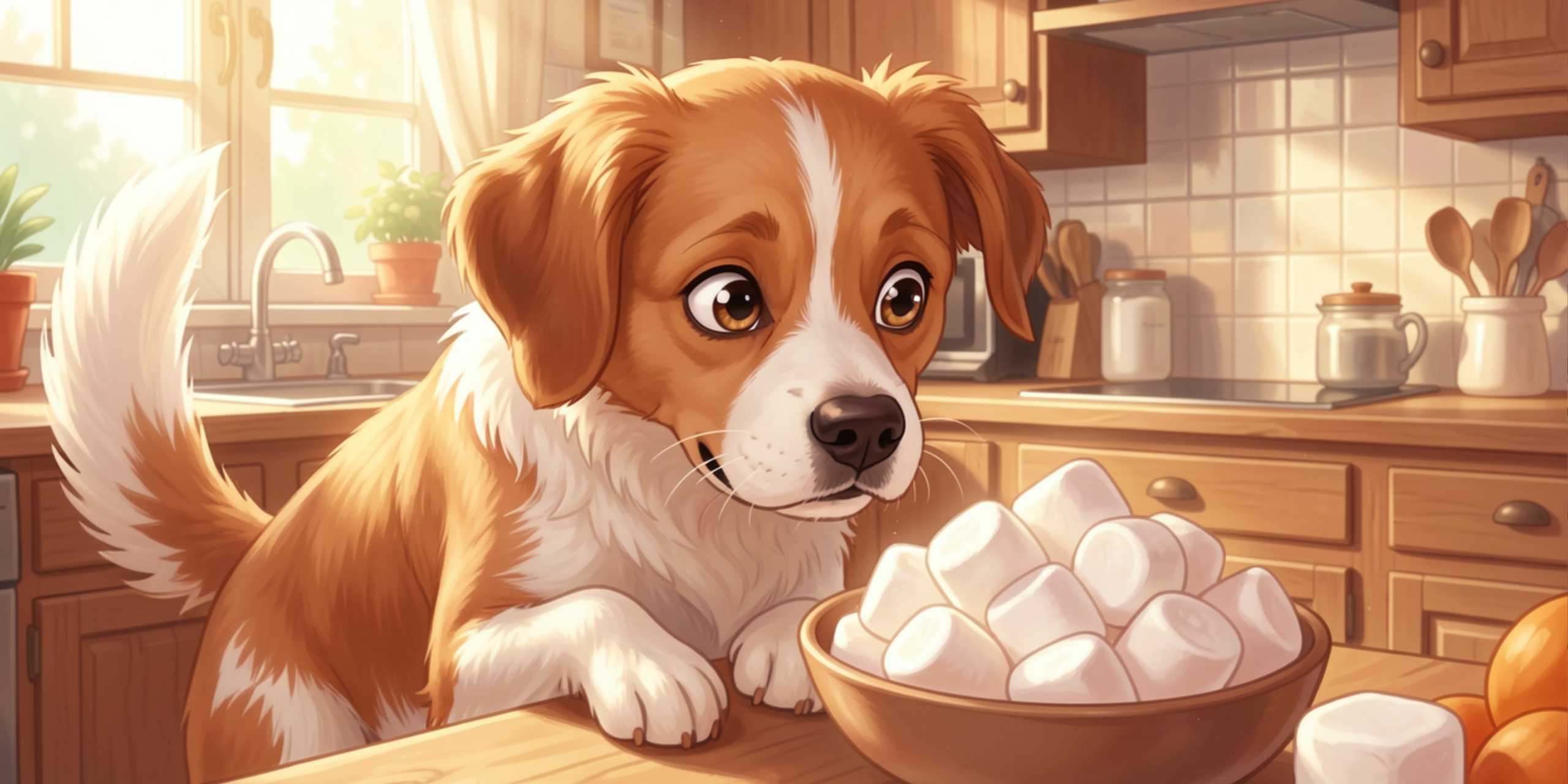
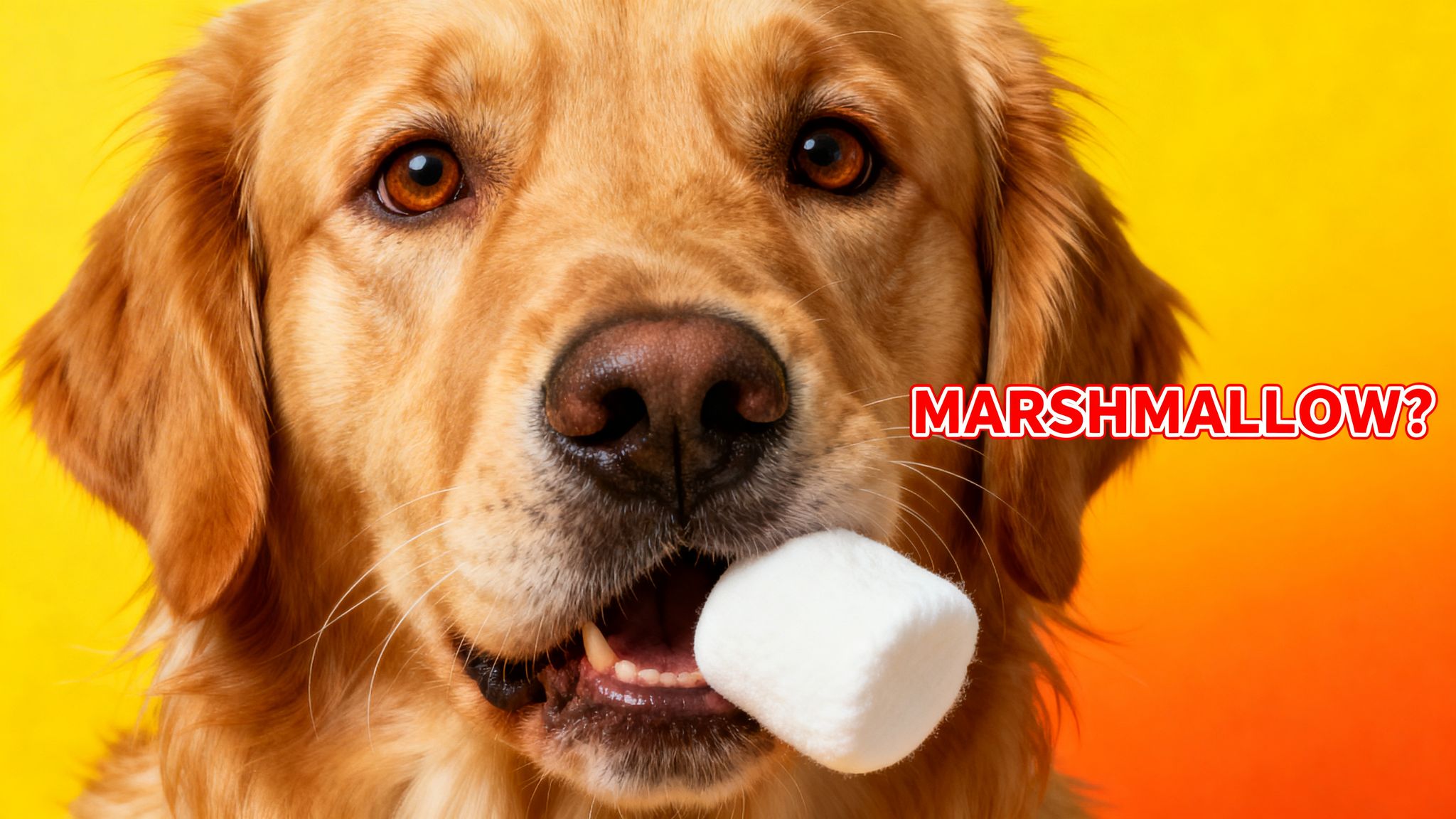
Marshmallows are a sweet, fluffy treat that many people love to snack on, especially during holidays, camping trips, or cozy nights at home. If you’re enjoying one and your dog is staring at you with those hopeful eyes, it’s natural to wonder: can dogs have marshmallows?
The short answer is that marshmallows are not a healthy or recommended treat for dogs, and in some cases, they can be dangerous. Let’s break down what marshmallows are made of, how they affect dogs, and what you should do if your dog eats one.
What Are Marshmallows Made Of?
To know whether marshmallows are safe to dogs, one will look at the ingredients of the marshmallows.
Most store-bought marshmallows contain:
- Sugar or corn syrup
- Gelatin
- Artificial flavors
- Artificial colors
- Sometimes xylitol (in sugar-free versions)
Although these ingredients are usually safe to human beings in small quantity, dogs digest food in very different ways. What appears innocent to us might create issues to them.
Are Marshmallows Safe for Dogs?
Regular Marshmallows
Sugar free plain marshmallows are not toxic, but neither good nor bad with dogs. These are not beneficial to health and are full of sugar, which can cause some health complications in the long run.
A few bites every now and then would not do much harm to most dogs but should not be a habit.
Sugar-Free Marshmallows
Marshmallows that have sugar-free are very harmful to dogs as they are usually filled with xylitol.
Xylitol is extremely poisonous to dogs and may cause:
- Rapid drop in blood sugar
- Vomiting
- Loss of coordination
- Seizures
- Liver failure
The slightest portion of xylitol may be fatal. In case your dog has consumed a sugar-free marshmallow, you should call a veterinarian.
Why Marshmallows Are Bad for Dogs
Marshmallows are also quite dangerous even in the absence of xylitol.
High Sugar Content
Marshmallows consist of sugar mostly.
Too much sugar can cause:
- Upset stomach
- Diarrhea
- Weight gain
- Increased risk of diabetes
- Dental problems
Dogs do not require the extra sugar in their food and they may have long-term health issues due to the frequent consumption of sugary treats.
Choking Hazard
Marshmallows are soft and sticky and thus they are a possible choking hazard- particularly to small dogs or those that swallow their food. The sticky consistency may also be trapped in the throat.
Digestive Issues
Some dogs have sensitive stomachs.
Eating marshmallows may lead to:
- Gas
- Bloating
- Vomiting
- Loose stools
Some dogs may not digest gelatin and artificial additives.
What Happens If a Dog Eats a Marshmallow?
If It’s Just One Regular Marshmallow
When your dog consumes one, regular marshmallow, then it is not necessary to panic.
Watch for mild symptoms like:
- Temporary stomach upset
- Slight lethargy.
Ensure that your dog has fresh water and do not give it any more sugary treats.
If It’s Sugar-Free or Multiple Marshmallows
This situation is more serious.
You should look for signs such as:
- Vomiting
- Weakness
- Shaking
- Trouble walking
Call your vet, or an emergency animal clinic immediately, in case of xylitol or a very big portion of it was consumed by your dog.
Can Puppies Have Marshmallows?
Marshmallows should not be given to puppies. They have even more sensitive digestive systems than the adult dogs and sugary foods can easily damage their stomachs. Small size also exposes puppies to the risk of being choked.
It is preferable to use puppy-safe snacks that are specifically made with their age and nutritional requirements.
Are Homemade Marshmallows Any Better?
There are individuals who believe that homemade marshmallow is safer since it has fewer additives. Although they might not have the artificial color or taste, they still have sugar, which does not make them the best treat to give to a dog.
Homemade marshmallows are a little less dangerous than sugar-free ones in the stores, but they still do not have any tangible advantage to the health of your dog.
Healthier Alternatives to Marshmallows for Dogs
If you want to treat your dog, there are many safer and healthier options.
Dog-Safe Fruits and Veggies
These can be given in moderation:
- Apple slices (no seeds)
- Blueberries
- Carrots
- Plain pumpkin
- Watermelon (seedless)
Dog Treats Made for Dogs
The commercial dog treats are developed keeping in mind the canine nutrition.
Look for options with:
- Limited ingredients
- No added sugar
- No artificial sweeteners
Homemade Dog Treats
Even basic snacks can be made at home with such ingredients as peanut butter (xylitol-free), oats, and pumpkin puree.
Why Dogs Love Marshmallows So Much
Dogs have the instinct to love sweet and fatty foods. The marshmallows are aromatic and soft-textured which most dogs love to chew. Nevertheless, the fact that dogs are fond of something does not imply that it is good to them.
It is necessary to strike a balance between treats and the overall health of your dog as a pet owner.
How to Handle Begging When You Have Marshmallows
If your dog begs every time, you open a bag of marshmallows, try these tips:
- Instead, provide a treat safe to dogs.
- Do not share food on your plate.
- Store marshmallows away.
- Praise or playtime reinforcement of good behavior.
Consistency helps prevent begging habits from forming.
Should Dogs Have Marshmallows?
Marshmallows are not toxic in small amounts, but they are not recommended for dogs. They are high in sugar, provide no nutritional benefit, and can cause digestive issues or choking. Sugar-free marshmallows are especially dangerous due to xylitol and should never be given to dogs.
If you want to spoil your dog, choose treats that support their health rather than risking unnecessary problems. A happy, healthy dog doesn’t need marshmallows—just good food, regular care, and plenty of love.








Leave a Comment