

As a dog owner, chances are that you have heard the phrase dog in heat. It is a stereotyped saying, particularly in reference to female canines. But what about male dogs? Do male dogs go on heat too? It is a tremendous question–and a significant one to all who would know the behavior of their dog, to avoid undesirable litters, or to be a good pet parent.
This article will deconstruct all you need to know about the dog heat cycle, how it influences both the male and the female dog, and what you should anticipate of your male dog when a female dog is in heat.
Understanding the Dog Heat Cycle
It is good to know what the dog heat cycle is before we get into whether the male dogs go on heat or not. The heat cycle is the time during which a female dog is sexually active and capable of getting pregnant. It is like a menstrual cycle in human beings, but the process and indicators are very different.
The Four Stages of the Female Dog Heat Cycle
A normal heat cycle of a dog is four-staged in a typical female dog:
Proestrus (Preparation Stage)
Duration: Around 7-10 days
What happens: The body of the dog readies itself to mating. You can observe the swelling of the vulva and bloody discharge.
Behavior: She can get the male attention but she is not ready to have a mate.
Estrus (Mating Stage)
Duration: 5-10 days
What occurs: The discharge is lightened and now the female is fertile.
Behavior: She is open to males and might be flirting or affectionate.
Diestrus (Post-Heat Stage)
Duration: Around 2 months
What occurs: Hormones become steady. In case she is pregnant, then it is during this time that the pregnancy develops.
Behavior: She is no longer open to males.
Anestrus (Resting Stage)
Duration: About 4-6 months
What occurs: The reproductive system rests till the following cycle.
On average, female dogs enter heat after every six months but smaller breeds might enter heat more frequently, and larger breeds might enter heat less frequently.
Do Male Dogs Go on Heat?
Here's the short answer:
No, male dogs do not go on heat.
The use of the word heat or estrus is specifically used in reference to female dogs. Male dogs do not have a reproductive cycle as a female would, they do not bleed, ovulate and go through hormonal phases.
Nevertheless, that does not imply that male dogs do not undergo changes and exhibit intense sexual behaviors. They simply act in different ways.
What Happens to Male Dogs During a Female’s Heat?
Although, male dogs do not have a heat cycle, they become highly alert when a female nearby is in heat. Pheromones are emitted by a female in heat, and the male dogs are able to smell these even at a distance of miles.
Common Male Dog Behaviors When a Female Is in Heat
The male hormones, especially testosterone, get into top gear when he detects a female in heat.
You might notice:
Restlessness or Agitation
He can walk about, whine or become anxious particularly when he is unable to access the female.
Increased Marking or Urination
In male dogs, marking is usually more common in order to attract attention of females.
Mounting Behavior
He may be trying to climb other dogs or other objects and even people.
Loss of Appetite
There are male species that are so preoccupied by the smell of a female to an extent that they decline to eat.
Attempting to Escape
Trying to escape your yard or home to find the female, a male dog may break through.
These behaviors can last for the duration of the female’s heat cycle — usually about 2 to 3 weeks.
Do Male Dogs Experience Hormonal Changes?
Yes, but not like females.
Testosterone levels in male dogs are constant after sexual maturity (about 6-12 months years of age in most breeds). Their hormones do not change in a cyclic manner as in the case of females.
But when a female in the area goes into heat, the testosterone level of a male might momentarily increase as a result of being aroused by the odor of the female. This is capable of causing behavioral changes, however, not a heat cycle.
How to Manage a Male Dog Around a Female in Heat
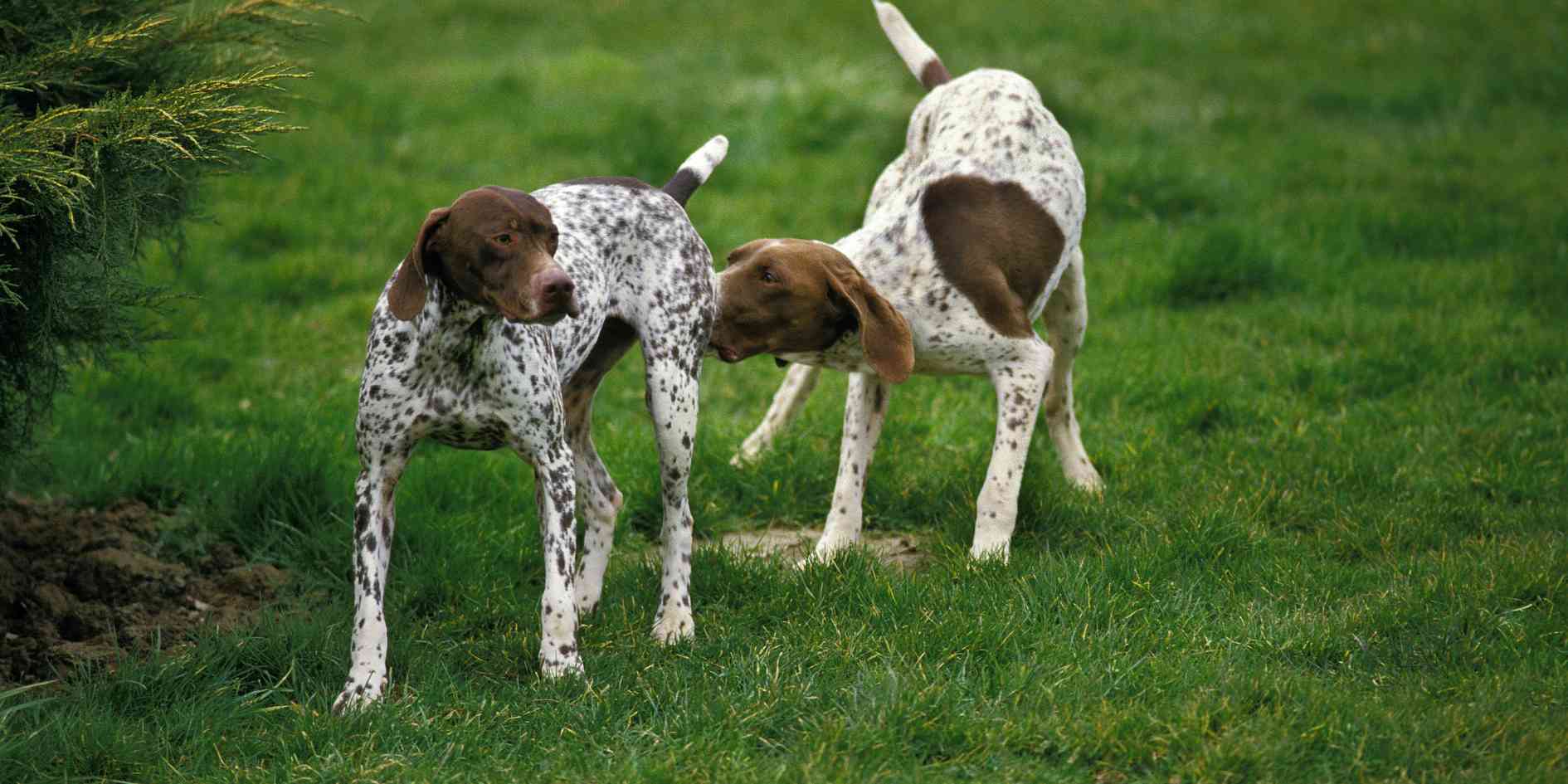
In case you have both male and female dogs or in case you live in the neighborhood where you can find unspayed females, it is not always easy to control your male dog during a heat cycle. Here's what helps:
Keep Them Separated
When feasible, confine male and female dogs in dissimilar areas within the house or the yard. Although you may believe that your fence is safe, well-willed dogs will find a way to reach one another.
Supervise Walks
A male dog should always be on a leash when walking. He can behave distracted or attempt to run away in case he smells a female.
Provide Mental Stimulation
Give him puzzle toys, more playtime, or obedience training so that his mind will not think of mating.
Keep Windows and Doors Security
When driven by the scent of a female, male dogs may turn out to be escape artists.
Consider Neutering
Neutering (castration) deceases the level of testosterone that may greatly decrease sexual behaviors and the urge to roam.
The Benefits of Neutering a Male Dog
Neutering your male dog will not only help you avoid unwanted puppies but it will also help them to be better and be healthier.
Behavioral Benefits
- Minimizes wandering and violence.
- Reduces mounting and labeling behaviors.
- Assistance in concentration and training.
Health Benefits
- Prevents testicular cancer.
- Lowers the chances of malfunctioning prostate.
- Can live longer because of reduced cases of hormonal related diseases.
Nevertheless, timing is something that you should speak with your veterinarian. Other professionals advise waiting until your dog has grown up so that it does not influence the growth of bones.
What Age Do Male Dogs Become Sexually Mature?
Sexual maturity in male dogs normally occurs at the age of 6 months, but it may differ according to the breed. The small breeds mature quicker and the large breeds take up to one year or beyond.
When a male dog is mature, he can get into mating at any time – as opposed to a female, which will only mate when it is in heat. This is the reason why the intact (un-neutered) males should be handled with care.
When to Talk to Your Veterinarian
When your male dog is exhibiting too much anxiety, lack of appetite or stressful behavior whenever a female is in heat it may be time to visit your veterinarian. They would be able to give advice on behavioral management, talk about neutering, and screen any underlying health problems.









Leave a Comment