

Dogs have long been called “man’s best friend,” but their unique ability to connect with humans goes beyond loyalty or companionship. One of the most fascinating aspects of this bond is a dog’s ability to understand human emotions. Many dog owners notice that their pets seem to sense their mood, reacting differently when they are happy, sad, or angry. But is this observation just a coincidence, or do dogs truly understand human facial expressions? Science is shedding light on this intriguing question.
How Dogs Read Our Faces
Dogs are also social animals and through the thousands of years of domestication, they have become very sensitive to human behavior. Dogs have adapted to live side by side with humans unlike the wolves or other wild canines. One of these developments is the interpretation of social signals such as facial expression.
Scholars have done a lot of research to establish whether dogs are capable of understanding human emotions based on their facial expressions. In one of the remarkable studies dogs were presented with pictures of human faces that were happy and angry. Not only did the dogs differentiate the two emotions but they also reacted differently depending on what they observed. As an illustration, dogs were more likely to go to happy faces and avoided angry faces.
This suggests that dogs do not just react to tone of voice or body language—they actually recognize specific facial expressions and associate them with certain emotional states.
The Science Behind Canine Emotion Recognition
The brain structure and sense make dogs understand human emotions close to the ability. Dogs are highly social creatures, which is unusual considering that they depend mainly on sight and scent. Temporal cortex is an element of the brain that is concerned with processing faces and emotions and when the dogs are exposed to human faces, its activity is heightened.
In addition, eye-tracking technology research has shown that dogs pay attention to the eyes and mouth when looking at the face of a human being- just as human beings. This implies that they are processing information that is the most expressive of the face to process emotion.
Hormones also play a role. As an example, the so-called love hormone oxytocin is emitted in both dogs and humans when there is a positive interaction. This hormone reinforces bonding and can increase sensitivity of a dog to emotional signals. The release of oxytocin in both parties when the dogs stare at the eyes of their owner strengthens the emotional bond between the two and may even enhance their skill in deciphering facial expressions.
Dogs’ Reactions to Different Emotions
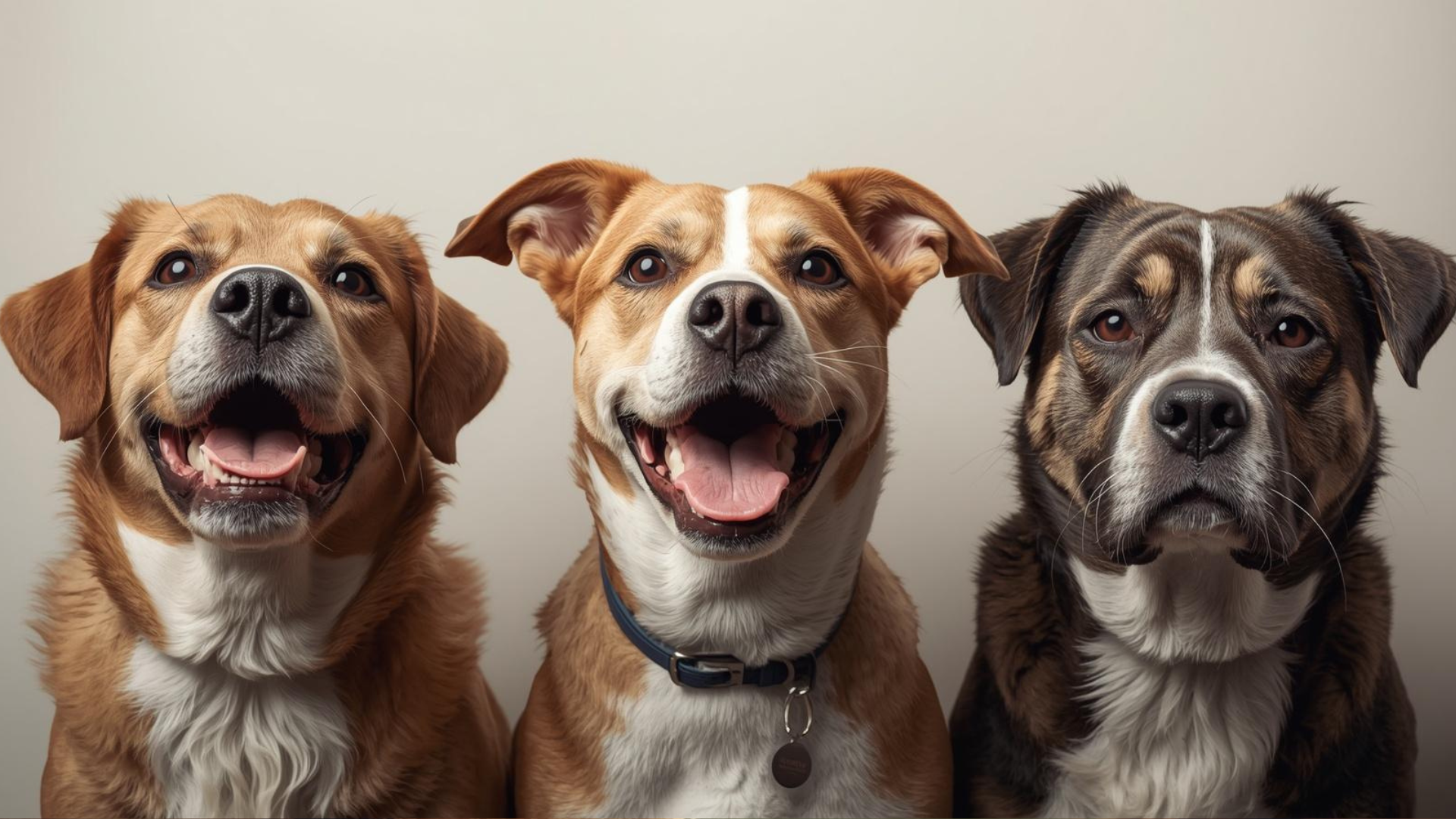
Dogs are not mere spectators and they react to the emotions of humans.
They may react differently to different expressions:
Happiness: To show a positive feeling, dogs tend to wag their tails, go towards their owners or playfully when they observe happy faces. This reaction assists in strengthening the bonding process and promotes the social interaction.
Anger: When dogs are faced with angry facial expressions, they will either avoid or express their submissiveness. It is a survival mechanism because it is possible to avoid conflict by reacting to negative emotions in accordance.
Sadness: Dogs are able to show people signs of comfort, including pawing or snuggling up to someone who seems sad. Although there is an argument on whether this is empathy or learned behavior, it is evident that dogs are sensitive to such emotional signals.
It should be mentioned that the behavior of dogs can also be predetermined by their personality, previous experiences, and the type of relations they have with their master. A dog that has been socialized with the human beings at a tender age tends to understand facial expressions better than a dog that has had limited socialization.
How Dogs Learn to Read Human Emotions
Although there might be an element of instinct in some degree of reading emotions, learning is a major factor. Dogs keep an eye on what people do, and with time, they get linked to the expressions and the consequences. As an illustration, a dog can pick up that smiling will be followed by petting, or praise, whereas a frown will likely be accompanied by the words no or by being left alone.
This skill is improved through training and socialization. The more dogs are subjected to different human expressions as well as different social situations, the more they become skilled in recognizing emotions. On the same note, service and therapy dogs are usually trained to detect certain emotional conditions and hence they respond accordingly to their human companions.
Studies That Support Canine Emotional Intelligence
There is a great deal of evidence in scientific research that dogs are able to read human emotions. A single experiment published in Current Biology has shown that dogs do not only distinguish between happy faces and angry faces, but also exhibit lateralized brain activity (i.e. one side of the brain responds more to some expression, just as it happens with humans).
In another experiment in Science, dogs were put to test, how they responded to a combination of auditory and visual stimuli. Dogs reacted positively when they heard a human voice saying they were happy and when they saw a happy face as compared to the opposite. It demonstrates that it is not only through facial expressions that dogs are able to decipher human emotions, but through a combination of various sensory signals.
Implications for Dog Owners
Learning the fact that dogs are able to read facial expressions may enhance the communication between dogs and their owners.
The following are some of the practical lessons:
Be aware of your facial expressions: Dogs are sensitive to the slightest of gestures, and through being aware of your emotions, you can shape your pet into any action.
Positive reinforcement works best: When people smile and express happiness during training, it helps to make dogs respond and learn more efficiently.
Recognize stress signals: Dogs are able to detect stress or anger and thus by controlling your emotions you are able to avoid the negative behavior of your pet.
The knowledge will be of great importance to families, dog trainers, and therapy dog handlers. The acknowledgment of the emotional intelligence of dogs will enhance the connection between a human and a dog and facilitate the improved care.
Can Dogs Really Feel Empathy?
Although there is agreement among scientists that dogs can learn the facial expression of human beings, the question of whether they empathize with them, or not is a question of debate. Others say that this is due to conditioning, that dogs have learnt to react in a certain way to be rewarded. Some other propositions indicate that dogs are emotionally contagious, and they reflect the emotions of human beings surrounding them.
No matter the scientific position, the practical result is the same: the dogs comfort, give companionship and emotional support to their humans, in many amazingly instinctive ways.
How Dogs Connect With Humans
Dogs do understand the facial expression of humans to a large extent and this is science. Their social intelligence is deep as they are able to read their emotions, react to them, and even reflect on them. This is a skill that has been developed through thousands of years of domestication and strengthened through learning and day-to-day interaction.
In the case of dog owners, knowing about this power may help to enhance communication, build stronger relationships, and establish a more peaceful relationship. Although dogs cannot be said to think like humans, their ability to understand emotions makes them extraordinary companions, who are able to show empathy, understanding, and affection, and that is astonishing to both scientists and pet lovers.
So, the next time your dog tilts its head or nudges you after a long day, it’s not just coincidence—it’s your loyal friend responding to the emotions on your face, proving once again why dogs truly are man’s best friend.









Leave a Comment