
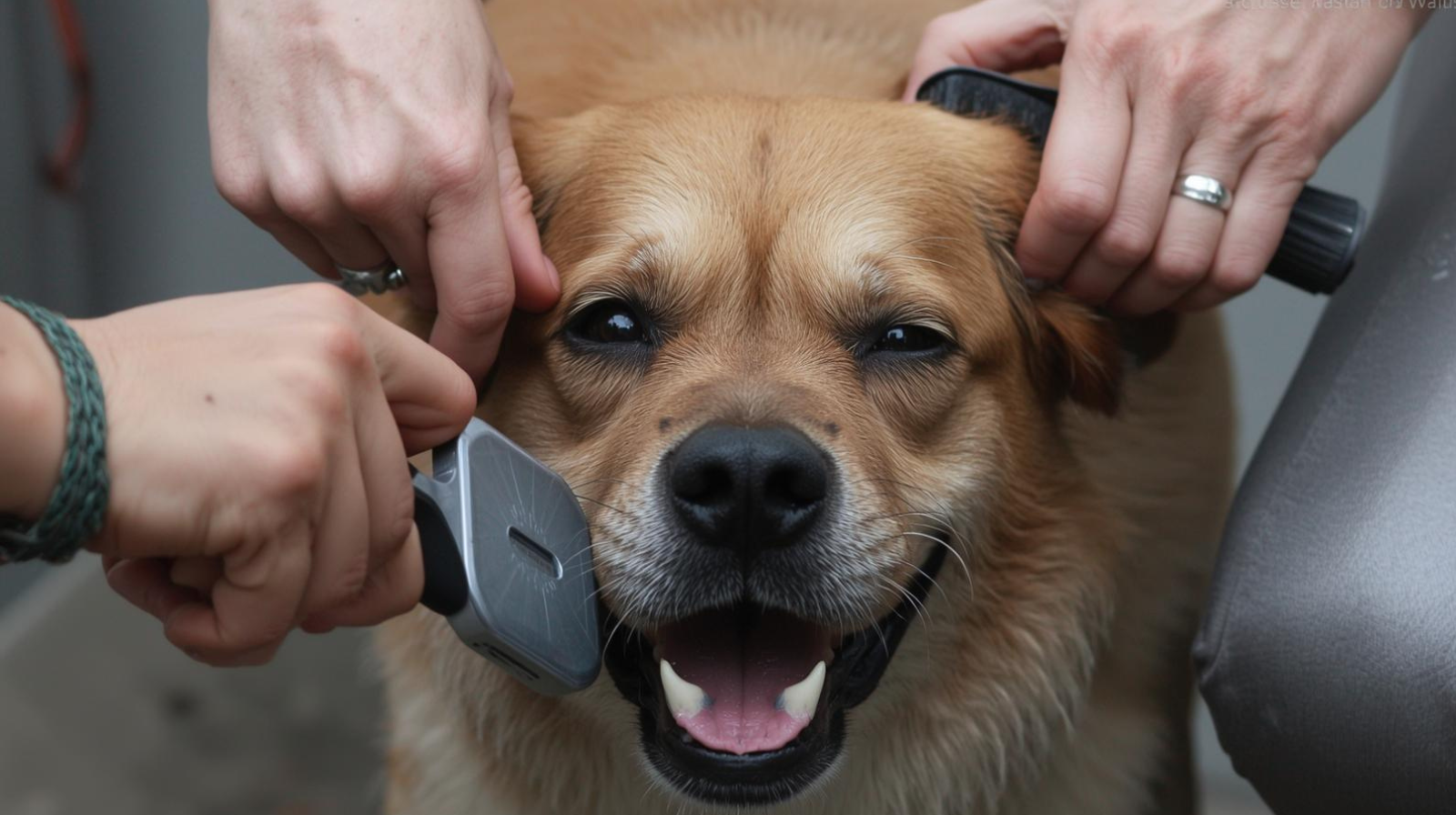
Grooming an aggressive dog can feel overwhelming even scary. Whether your dog growls, snaps, or panics during brushing or baths, you’re not alone. Many dogs show aggression during grooming because of fear, pain, past trauma, or lack of proper handling.
The good news? With the right approach, patience, and safety measures, grooming an aggressive dog can be done safely and humanely.
This guide walks you through step-by-step strategies to reduce stress, protect everyone involved, and keep your dog healthy and comfortable.
Understanding Why Dogs Become Aggressive During Grooming
It is necessary to know why your dog is aggressive before you pick up a brush, or even a nail clipper.
Common Causes of Grooming Aggression
- Anxiety or fear of the unknown tools or previous negative experiences.
- Medical problems like arthritis, ear infection, or skin problems.
- Absence of early training in handling and grooming.
- Feeling restrained or trapped.
- Protecting instincts, particularly of the vulnerable parts.
Aggression is often a form of communication. Your dog isn’t trying to be “bad”—they’re trying to say, “I’m scared” or “This hurts.”
Safety Comes First: Protect Yourself and Your Dog
Safety is the most important thing in grooming an aggressive dog.
Essential Safety Tips
- Do not groom a vicious dog when you are in a hurry or angry.
- Avoid face to face positioning.
- Move slowly and predictably.
- Terminate aggression when it gets out of control.
Should You Use a Muzzle?
An appropriately attached basket muzzle may be a temporary safety device but not a punishment. When your dog has been muzzle-trained, it will be able to prevent bites whilst still being able to pant and breathe. Do not press a panicking dog with a muzzle.
In case your dog has bitten someone in the past, then go to a professional groomer or veterinarian rather than trying to groom him or her at home.
Preparing Your Dog for Grooming
The grooming session can be broken or made by preparation.
Create a Calm Environment
- Select a room that is distraction free.
- Turn off loud TVs or music
- Slipping may be avoided by using non-slip mats.
- Introduce Tools Slowly.
Allow your dog to observe, smell and listen to grooming devices prior to their use. Turn clippers on and off, reward calm behavior, and turn them off.
Use Positive Reinforcement
Luxury snacks (such as little bits of chicken or cheese) miraculously. Praise good conduct often–even in little successes.
Start with Short, Low-Pressure Sessions
You do not even have to groom your dog immediately.
Keep Sessions Short
Begin with 1-5 minutes and gradually increase with time. It should end on an uplifting note as a way of creating trust.
Focus on One Area at a Time
Rather than a complete grooming session:
- Brush one leg
- Clean one ear
- Clip just a few nails
It is progress–even though it is slow.
Grooming Techniques for Aggressive Dogs
Various grooming activities invoke varying responses. The most common ones can be dealt with as follows.
Brushing and Coat Care
- Apply soft brushes or grooming gloves.
- Begin on less sensitive parts such as the back or shoulders.
- Do not pull-on mats- spray off the detangling spray.
In case of a badly matted dog, then it is safer to go to a professional groomer or a veterinarian.
Bathing an Aggressive Dog
The bath time can be a particularly distressing experience.
Tips for Safer Baths:
- Use lukewarm water
- Avoid spraying the face
- Showerhead or pitcher should be used
- Speak calmly throughout
There are dogs that respond well to waterless dog shampoos or professional grooming services.
Nail Trimming Without the Drama
The nails are considered to be one of the largest provokers of aggression.
Helpful Strategies:
- Apply nail grinder rather than nail clippers (the quietest models are best).
- Clip one nail at a time rather than clipping all of them.
- Routine touching paws when not grooming.
In case your dog is very stubborn, request your vet to trim his nails during a check-up.
Ear and Face Grooming
- These are very sensitive areas.
- Apply ear cleaners that are veterinarian endorsed.
- Do not put instruments deep in the ear.
- Facial cleaning is done using a wet cloth.
In case your dog snaps as you touch his ears or face, then stop and seek the advice of a professional.
When to Call a Professional Groomer or Veterinarian
Some dogs are simply not safe to groom at home, and that’s okay.
Signs You Need Professional Help
- History of biting
- Extreme panic or shaking
- Aggression which is aggravated by training
- Pain causing medical conditions.
Fear-free or aggressive dog grooming is the subject of many grooming salons. In case of necessity, veterinarians are also in a position to groom dogs under mild sedation.
Training and Behavior Modification
Long-term improvement comes from training—not force.
Desensitization and Counterconditioning
This is through gradual exposure of your dog to grooming coupled with positive associations.
Example:
Touch paw – treat
Hold clipper near paw – treat
Clip one nail – jackpot reward
Consistency is key.
Consider a Certified Dog Trainer
Find trainers who are certified by such organizations as:
- Certification Council for Professional Dog Trainers (CCPDT).
- IAABC (International Association of Animal Behavior Consultants).
They are able to develop a special plan to your dog.
What Not to Do When Grooming an Aggressive Dog
Avoid these common mistakes:
- Shouting or chastisement of aggression.
- Forcing your dog to “submit”.
- Not paying attention to such warning signs as growling or rigid position.
- Attempting to bathe a dog that is hurt or ill.
- Such acts enhance fear and aggravate aggression in the long run.
Patience Makes the Difference
Grooming an aggressive dog isn’t about control it’s about trust, safety, and understanding. Progress may be slow, but every calm interaction builds confidence for both you and your dog.
When in doubt, don’t push it. Professional groomers and veterinarians exist for a reason, and using their help is a sign of responsible dog ownership not failure.
With patience, positive reinforcement, and the right support, even aggressive dogs can learn that grooming doesn’t have to be scary.









Leave a Comment