
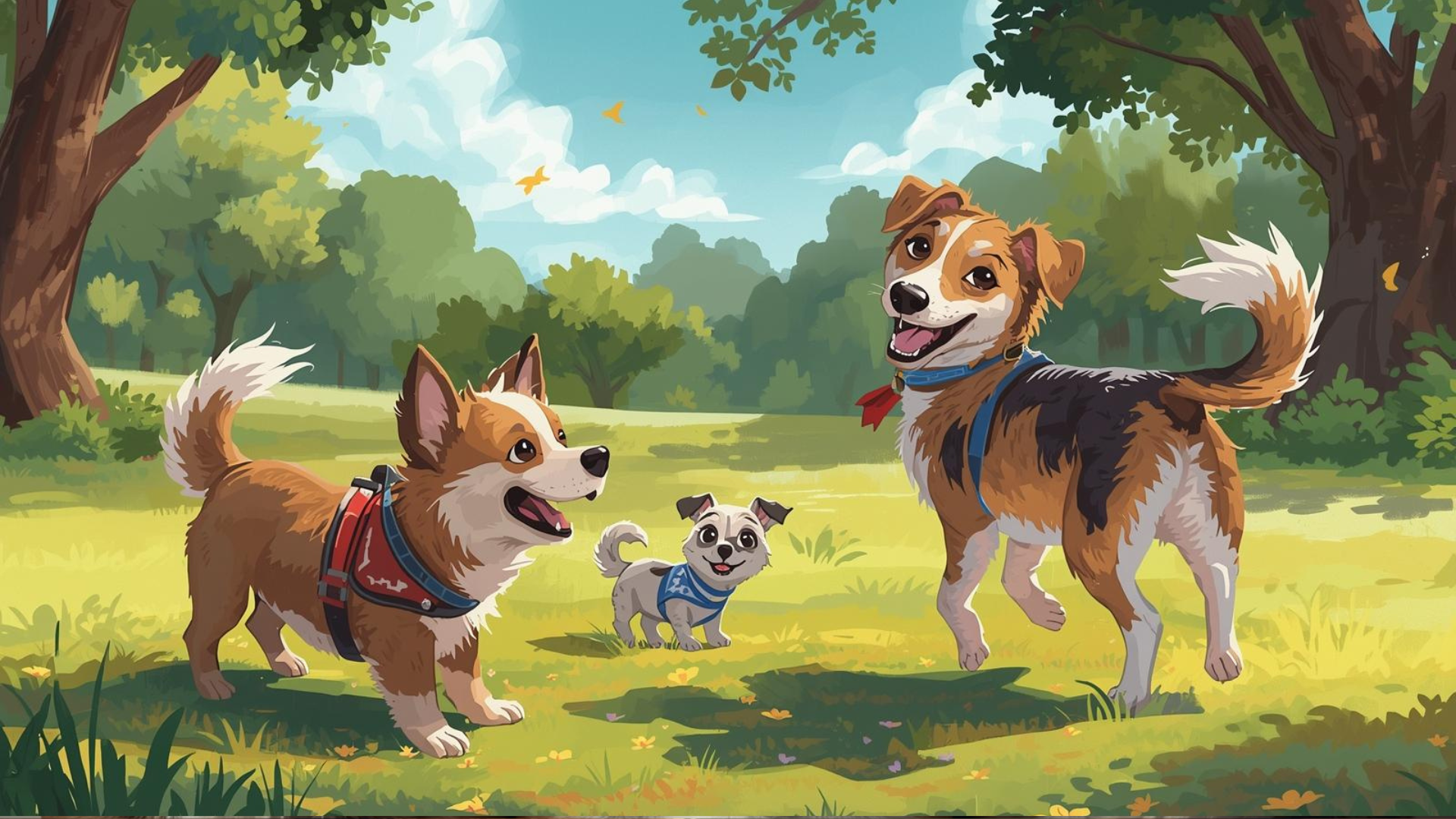
Dogs communicate in many ways, but one of the most recognizable signals is tail wagging. Many people assume that a wagging tail always means a dog is happy, but the truth is much more complex. A dog’s tail can express excitement, nervousness, curiosity, fear, or even warning. Understanding these signals can help strengthen the bond between you and your dog while also helping you respond appropriately to their emotions.
In this article, we will explore what your dog’s tail wagging really means, how different wagging styles reveal emotions, and how you can better interpret your dog’s body language.
Why Dogs Wag Their Tails
Wagging of tails is a natural way of communicating with dogs. It resembles the way human beings use facial expressions, gestures and tone of voice to convey feelings. Dogs also use body language in combination with tail movement to interact with humans and other animals.
The tail is attached to muscles located at the bottom of the spine and this enables the dogs to move the tail in a variety of directions. These movements may vary in their speed, height and intensity with the mood of the dog at a certain time.
For example, a slow wag can indicate uncertainty, while a rapid wag may show excitement. However, the context of the situation and the rest of the dog’s body language are just as important as the wag itself.
Researchers who study animal behavior have discovered that tail wagging is closely tied to emotions and brain activity. Different directions and speeds of wagging can even reflect different emotional states.
The Common Misconception: Wagging Means Happiness
A major misconception about dogs is that when the dog wags the tail, it is always a sign that the dog is friendly or happy. Although most happy dogs wag their tails, not every tail wagging is an indication of a happy dog.
A dog that is anxious, threatened or uncertain can also wag its tail. In other cases, a dog may wag its tail immediately before being aggressive. This is the reason why one should see the whole picture, posture, ears, eyes, and general movement of the body.
As an example, the body of a dog is rigid, and the tail wags slowly and is raised high, then it might not be happy, it may be tense. The identification of these signals can help avoid misunderstanding and possible bites.
Different Types of Tail Wagging and What They Mean
Tail wags are not always similar. The pace, course and the location of the wag can tell a great deal about what your dog is experiencing.
Fast and Wide Wagging
When the whole back end of the dog is moved in a fast, loose wag, it normally shows excitement and happiness. This kind of wag is commonly observed whenever you get home after a long time or when your dog is welcoming someone they love.
The body of the dog will also seem to be relaxed and wiggly in most instances. Their ears are in a neutral position and their mouth is slightly open in what appears to be a doggy smile.
This is one of the clearest signs that your dog is genuinely happy and comfortable.
Slow Wagging
A wag in slow motion is usually an indication of uncertainty. Dogs can wag their tails when they are not sure of what is happening around them as they evaluate the environment.
In case of a dog, when it meets a new individual or is in a new setting, it may wag its tail at a slow pace as it monitors the activities of the surrounding.
The dog in such cases is not always happy or unhappy. They are merely working through information and making decisions on how to respond.
High and Stiff Wagging
A dog may be alert or tense when it holds its tail high and wags it in a stiff manner. This kind of wag is frequently observed when a dog is trying to show its dominance or it is challenged.
The dog can be stiff in its body and the ears of the dog can be stiff forward. In other instances, this pose may indicate that the dog is getting on the defensive.
You should be careful when you observe such a tail movement particularly when the dog is a stranger.
Low Tail Wagging
The wagging of a tail held low may indicate nervousness or submission. The behavior may be exhibited by dogs when they are unsure, intimidated, or a bit anxious.
For example, when a dog meets a new person or enters a new environment, they might wag their tail slowly while observing what is happening around them.
This signal can be used to reassure the dogs and make them feel more at ease by understanding what it means.
The Direction of Tail Wagging
Interestingly, which way a dog is waving its tail can also give emotional hints. Research has indicated that dogs normally wag their tails in a more right-sided manner when they are experiencing positive emotions and in a left-sided manner when they are experiencing negative emotions.
Although these variations may be subtle and inaccessible to human senses, they demonstrate how sophisticated canine communication is.
Dogs are very expressive creatures and this is not the only aspect of their emotional language.
Tail Position Matters Too
The location of the tail in itself may also give more information about the emotional state of a dog.
A high tail normally signifies confidence or vigilance. When dogs are curious or when they see something interesting in their surroundings, they can lift their tails.
A dog in a neutral tail position, which is relative to the breed, usually indicates that the dog is calm and at ease.
On the other hand, a tail tucked between the legs is a clear sign of fear or extreme anxiety. When a dog tucks its tail, it is trying to protect itself and communicate that it feels threatened.
It is possible to learn how to identify such roles and react accordingly to the needs of your dog.
Reading Tail Wagging Along With Body Language

Wagging of the tail should never be taken in isolation. The communication of dogs is based on a set of signals that can be a combination of posture, facial expression, ear position, and sounds.
As an example, a happy dog may wag its tail when jumping, relaxing its body, and looking in the eyes. Conversely, a distressed dog will wag its tail, but it will be in stiff position with pinned ears and stare intensely.
Watching the whole body, you could have got a much better idea of what your dog is trying to tell you.
Why Understanding Tail Wagging Is Important
Understanding how to read the tail wagging can make your relationship with your dog much better. When you know how they feel, you are able to react better to their needs.
As an example, you can be able to notice the signs of anxiety and you can be able to comfort your dog before stress sets in. In the same manner, it is also good to know when your dog is excited or playful so that you can interact with him or her in a positive manner.
This awareness also helps prevent accidents. Many dog bites occur because people misunderstand a dog’s body language and assume the dog is friendly when it is actually feeling threatened.
By paying attention to tail signals and overall behavior, you can create safer interactions for both people and dogs.









Leave a Comment