
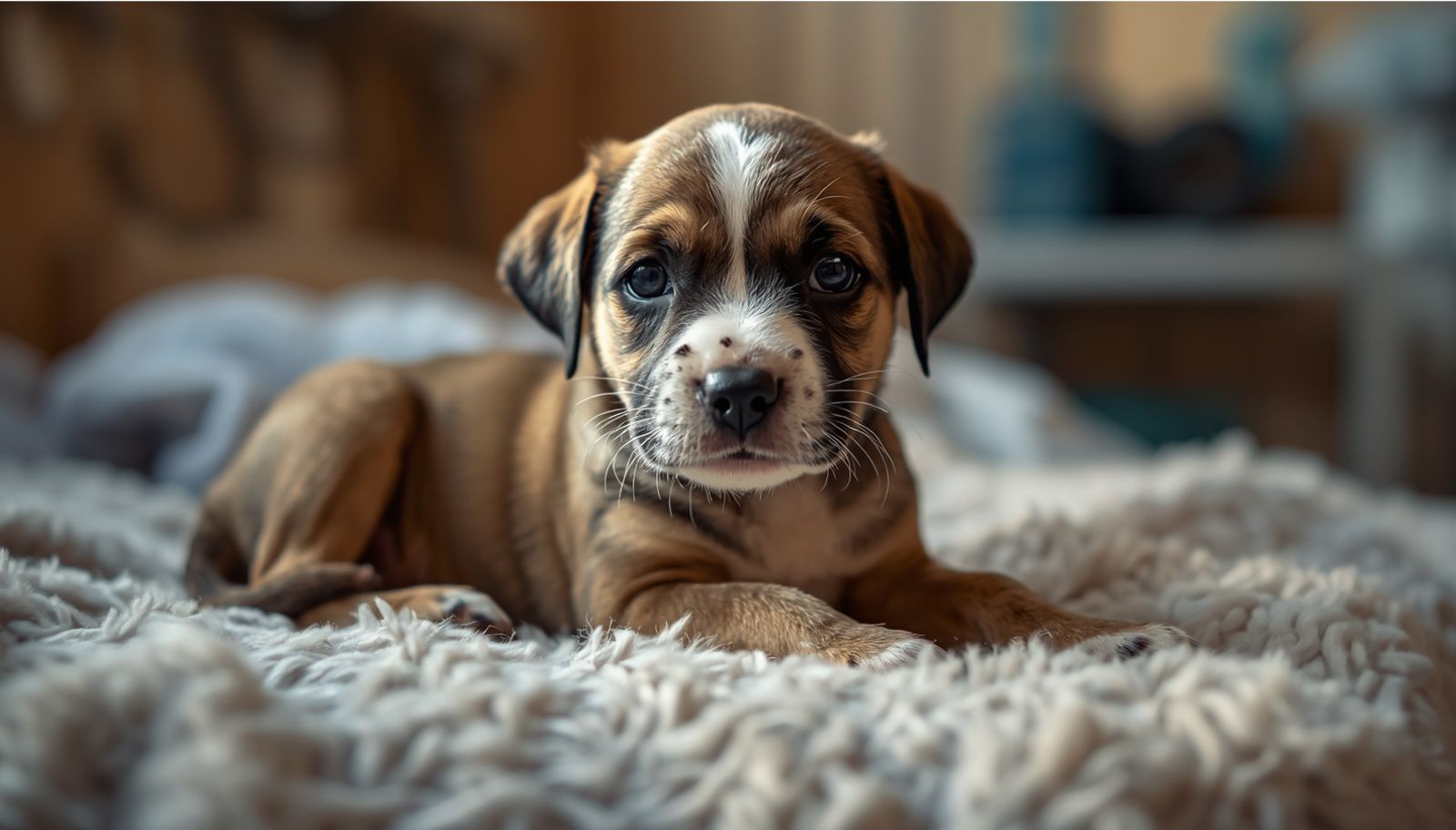
Umbilical hernias in puppies are a fairly frequent disorder that can cause new pet owners to be concerned. Although most of the cases are mild and harmless, others may develop into serious cases when not treated. Knowing their causes, the signs to look out, and when to visit the veterinary can go a long way in ensuring the health and comfort of your puppy.
What Is a Puppy Umbilical Hernia?
A puppy umbilical hernia is a small hole in the belly button (umbilicus) of the abdominal wall that fat or abdominal tissue can squeeze through. This forms a bulge under the skin that can be more pronounced when the puppy is standing, crying or straining.
This medical condition is also referred to as Umbilical hernia and it is a situation where the abdominal muscles fail to close completely after birth. The umbilical opening in most puppies spontaneously closes soon after birth, although in some instances, the process is not complete.
Umbilical hernias may be of different sizes. Others are as small as a pea and can self-close with the growth of the puppy, but larger ones might need medical care or surgery. With a small, uncomplicated hernia, most puppies with this condition lead normal, healthy lives.
Causes and Risk Factors
Puppies develop umbilical hernias which are normally congenital i.e. they are born with them. The condition is usually caused by the failure of the abdominal muscles in which the umbilical cord used to pass to close.
A significant role is played by genetics. Some breeds seem to be more susceptible, which implies that hernias are inherited. The breeding of dogs with a history of hernias could predispose the birth of puppies with hernias.
Other causative factors can be:
- Poor healing of umbilical cord postnatally.
- Excessive strain on the abdominal area in early development.
- Abdominal wall with weak connective tissue.
- Preterm birth or developmental problems.
It is worth mentioning that umbilical hernias are not brought about by lack of proper care following birth. They arise during the growth of the fetus and not because of the manner of handling or the environmental conditions once the puppy is born.
Signs and Symptoms to Watch For
The umbilical hernia is most easily noticed by the presence of a soft, round swelling around the belly button of the puppy. The appearance and severity may however vary.
Common signs include:
- A slight swelling around the belly button that can be intermittent.
- Swelling which increases with the activity or crying of the puppy.
- A tender feel that may be pushed back into the belly (in reducible hernias) slightly.
- In bigger cases, a lump that is firm or painful, and is not easy to move.
In mild cases, puppies usually do not exhibit any signs of discomfort and proceed to eat, play, and develop normally. Nonetheless, when the hernia is painful, firm, or discolored, it can be a sign of a complication that requires urgent veterinary care.
Any suspected hernia, no matter how small or harmless, should always be evaluated by a veterinarian.
Potential Risks and Complications
Although most umbilical hernias are not complicated, there is a risk of not treating them, particularly when the hernia is big.
The most severe complication is when abdominal tissue or intestinal segment is trapped in the hernia opening. This is referred to as incarceration or strangulation. When this occurs, the blood supply to the trapped tissue may be limited resulting in tissue damage or even life-threatening infection.
Signs of a complicated hernia may include:
- Abdominal pain or tenderness in the belly.
- Hard, hot, or discolored swelling.
- Anorexia or vomiting.
- Drowsy or abnormal behavior.
The smaller hernias are less likely to lead to complications, although they should be monitored. A small hernia may also become more severe as the hole in the abdominal wall fails to close as the puppy develops.
Veterinary advice given by American Veterinary Medical Association suggests that early diagnosis and observation of congenital anomalies such as hernias will prevent future health complications and make sure that they are treated in time.
How Veterinarians Diagnose the Condition
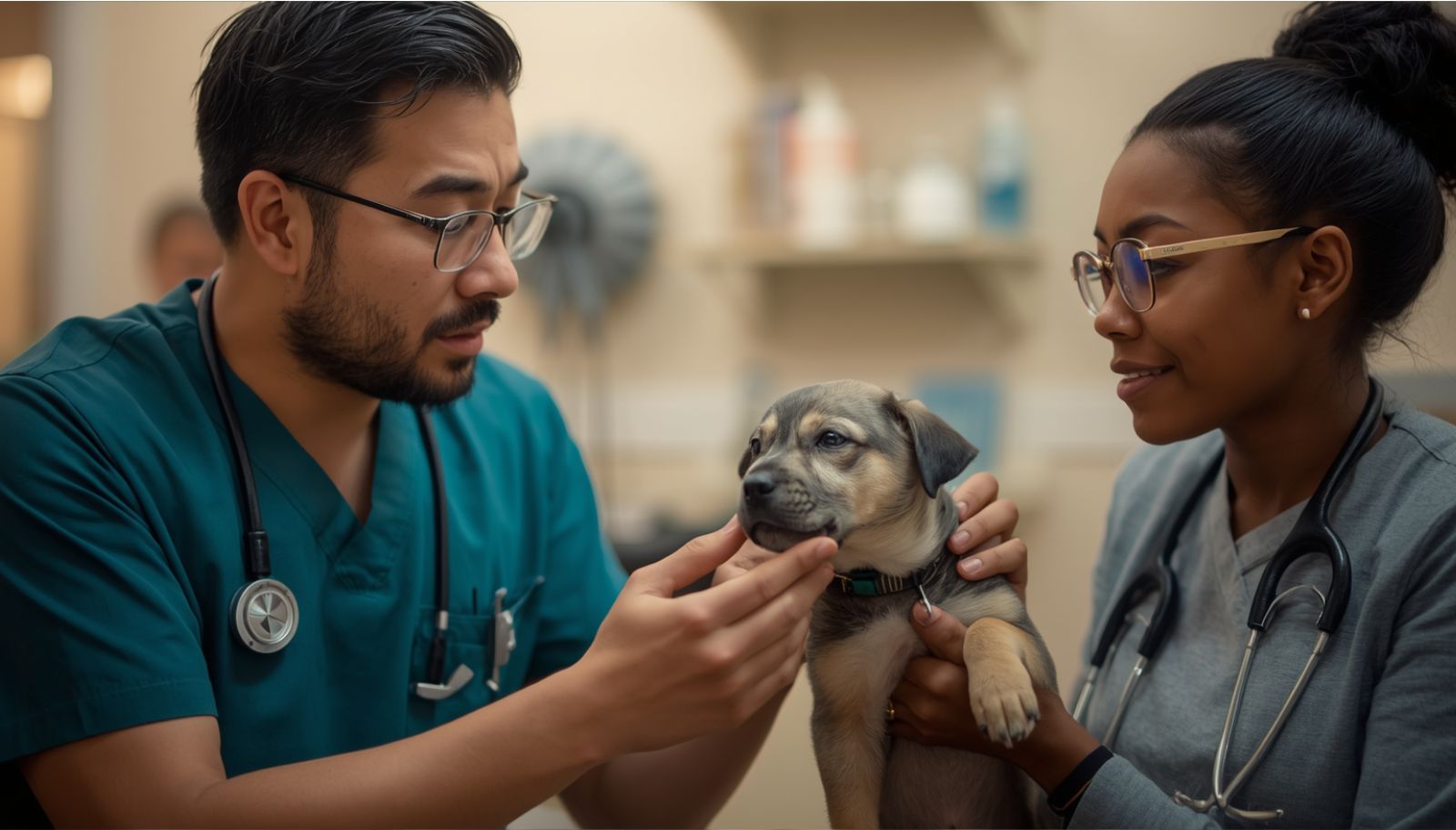
An umbilical hernia is typically diagnosed easily. It can be detected by a simple physical examination by a veterinarian who may feel the soft bulge around the abdomen of the puppy.
During the exam, the veterinarian will check:
- The size of the hernia opening.
- The ability of the tissue to be pushed back into the abdomen easily.
- Pain, swelling, or infection.
- Overall health and development of the puppy.
Imaging (ultrasound or X-rays) may be done in certain cases, particularly when the hernia is large or complex, to identify the presence of internal organs.
Veterinarians also determine whether the hernia will close on its own or not. In young puppies, small hernias may occasionally correct themselves in the first few months of life. Greater or chronic hernias have a lower chance of closing without surgery.
Treatment Options, Care, and Prevention
The treatment is based on the size and severity of the hernia. In simple cases that are not complicated, the veterinarians can prescribe just monitoring the condition as the puppy develops. Other minor hernias resolve on their own due to strengthening of the abdominal muscles.
Surgical repair is however usually advised when:
- The hernia aperture is big.
- The hernia does not close over time
- Trap of tissue is a possibility.
- The puppy is already in another procedure (spaying or neutering).
The surgery is normally simple and entails sealing the abdominal opening using sutures. The recovery process is normally easy and the majority of puppies resume normalcy within a few days.
At home, the owners are not supposed to press or manipulate the hernia over and over again as this may irritate the area. Changes in size, firmness or behavior that could be signs of complications should also be monitored.
Although no sure method is available to prevent umbilical hernias, they can be minimized by good breeding methods. Known hernias in dogs should not be bred as genetics is a major factor in the transmission.
The most appropriate way to make sure that any hernia is followed up and treated in the most appropriate time is to give a puppy regular veterinary checkups during the first few months of its life.

Leave a Comment