
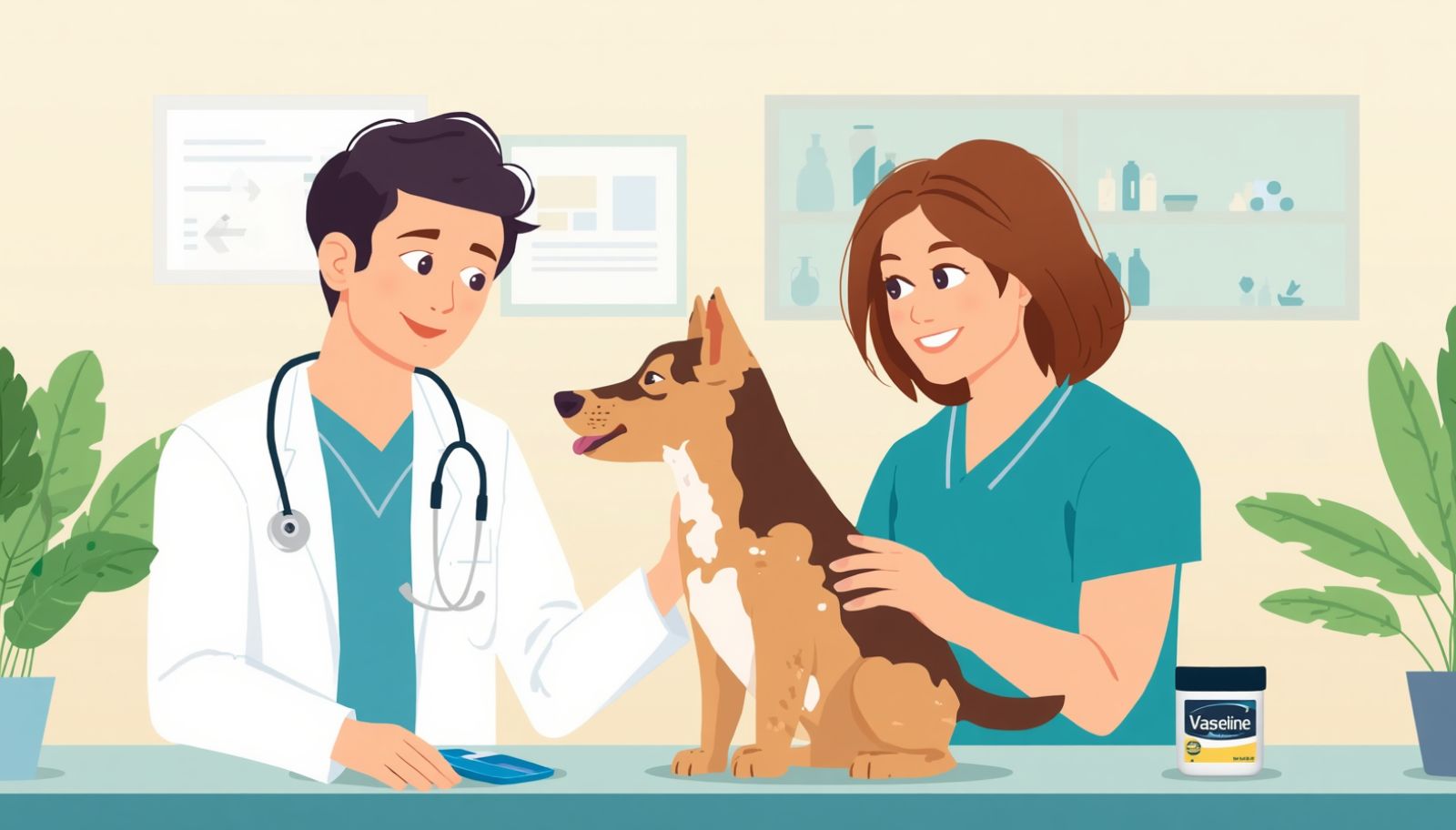
Being a caring dog owner, it is only natural to be concerned when your pet has dry skin, paws are cracked, or has small cuts. One common question that often pops up is: “Can I put Vaseline on my dog?” This article is going to discuss the safety, applications and substitutes of Vaseline in dogs, and provide you with all the information to take good care of your pet.
What Is Vaseline?
Vaseline or petroleum jelly is a thick greasy material that is usually applied by humans to keep the skin moist, to heal small cuts and to prevent chafing. Its components are mostly refined petroleum hydrocarbons, which are usually deemed to be safe when used externally by humans.
Although Vaseline is a common product among individuals, caution must be taken when applying it to pets, particularly dogs. Dogs possess varying skin PH and habits and therefore what is safe to humans may not necessarily be the best to them.
Is Vaseline Safe for Dogs?
The answer to this is yes, with caution.
Vaseline is not toxic to dogs, and so a small amount will not poison them when licked off. Nonetheless, when consumed in large quantities, it may lead to stomach upsets, vomiting, or diarrhea. So, it should be applied with restraint and you should keep an eye on your dog after it.
Some important considerations:
- Do not apply Vaseline to deep cuts or big open wounds.
- Store it in places that your dog can readily lick off.
- Watch out on any allergic reaction like redness, swelling or itch.
Uses of Vaseline on Dogs
In some cases, Vaseline may come in handy.
The following is a list of safe applications:
Dry or Cracked Paw Pads
Dogs tend to have dry and cracked paws particularly during winter or on hot sidewalks.
A thin coating of Vaseline may help:
- Moisturize paw pads
- Make a cushion against coarse surfaces.
- Lessen pain of minor cracks.
Hint: Rub onto the skin before walking and rub off after walking, to avoid being ingested.
Preventing Chafing
Certain dogs develop chafing under their armpits, between their legs or around the tail. Friction and irritation can be minimized by a little Vaseline.
Small Cuts or Abrasions
In minor scrapes or scratches, Vaseline may be used to keep the area wet so that it does not dry out to form painful scabs. Noticeable: Deep or infected wounds should be avoided; these should be taken to the veterinary.
When Not to Use Vaseline on Dogs
Although Vaseline is a good product, it is not applicable to all conditions:
Large Wounds or Infections: Vaseline may harbor bacteria and delay healing.
Around the Eyes, Mouth, or Nose: In the area around the mouth, nose or eyes: Irritable areas can occur.
Dogs that are Likely to Lick: There are dogs that will consume too much Vaseline leading to digestive problems.
In case of chronic skin dryness, rashes, or irritation, do not self-treat with Vaseline but visit your veterinarian.
How to Apply Vaseline Safely

In case you choose to apply Vaseline on your dog, do the following steps:
- Clean the Area:Wash the paws or skin with lukewarm water and mild dog shampoo.
- Dry Thoroughly:Be sure the area is dry.
- Apply Thin Layer:With a small portion, cover the affected area.
- Prevent Licking:Booties, socks, or cone in case your dog licks.
- Check: Observe any discomfort, redness, or irritation.
Alternatives to Vaseline
In some cases, other products can be safer or more effective in addressing the skin problems of your dog:
Coconut Oil
Coconut oil is safe, edible and antimicrobial to dogs. It may be used on paw pads, dry areas or on small abrasions.
Dog-Specific Paw Balms
Veterinary-approved paw balms and skin moisturizers that are specifically designed to work with dogs are numerous. They are made safe when consumed in low quantities.
Aloe Vera Gel
Aloe vera pure gel can be used to treat minor cuts and irritated skin. Ensure that it is not alcohol- or artificially scented.
Signs Your Dog Needs Veterinary Attention
Despite Vaseline or natural alternatives, there are cases when the skin issue of a dog needs professional attention.
Consult the veterinary in case of:
- Extreme itching or pain.
- Open wounds or bleeding.
- Swelling or redness
- Pus, odor or indications of infection.
- Constant licking or chewing.
With early intervention, complications can be avoided and your dog will be comfortable.
FAQs
Will Vaseline Poison My Dog when Licked?
Small doses are usually harmless, but large doses can lead to diarrhea or vomiting.
How many times can I use Vaseline on my dog?
In the case of dry paws or mild skin irritation, a daily dose is generally adequate. Always observe licking or negative reactions.
Does Vaseline Have a Dog-Safe Alternative?
Yes, safer in the long-term are coconut oil, dog paw balms, or veterinary-approved skin moisturizers.
It is true that Vaseline can be applied to your dog, but it must be sparingly and carefully. It works best on dry paws, small scrapes, or to prevent chafing, but not on large wounds or on licking areas. Always keep an eye on your dog following application and think of dog-safe options in long-term care.
Knowing when and how to apply Vaseline, you will be able to keep your dog comfortable and healthy and prevent possible threats.

Leave a Comment